Reading a Coral
If you have just arrived in a coral, here is how to get your bearings quickly.
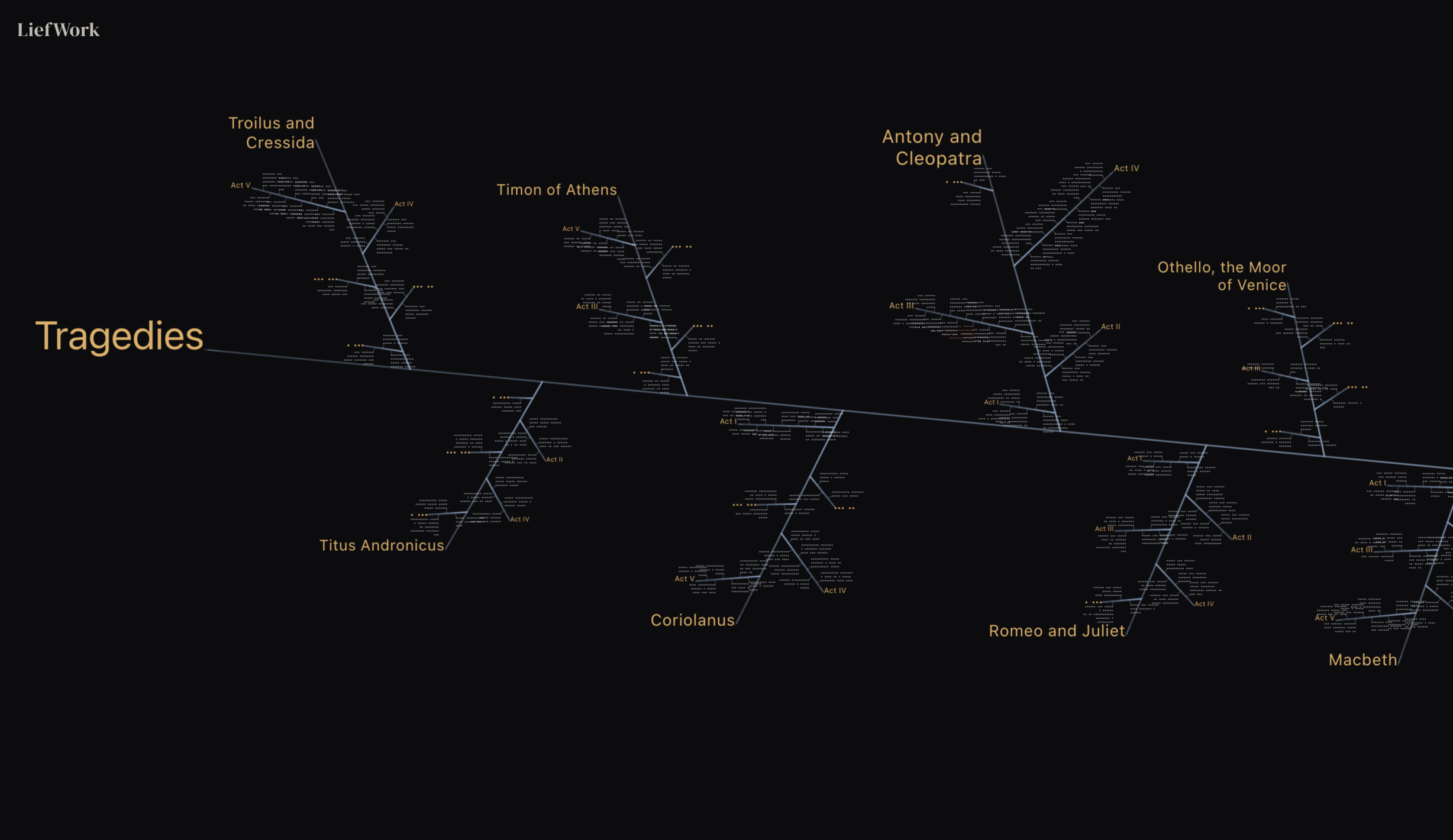
A coral is a folder tree, rendered as branches. But it is not a picture of the memory — it is the memory. Each note is a "lief". Each folder is a branch. And every branch has one special note, named after the folder itself: its meristem.
The meristem is the roll-up. It holds a distillation of everything beneath it, newest first. Start at the root meristem — the note named for the whole coral. In a few paragraphs it tells you what this coral is and what state its work is in. You are oriented, without having opened a single leaf.
From there, go only where you need to. Each branch has its own meristem; read the one for the area you care about, then its sub-branch, and so on. You are following summaries down a path, opening the detail beneath one only when that detail is the thing you came for. The rest stays closed. This is the whole trick of reading a coral cheaply: the roll-ups travel with you, and the leaves load on demand.
Navigate by name. Titles are written to predict their contents, so the shape of the tree tells you where to go. Within a branch, order runs oldest to newest — the tip is the current state, and the growth beneath it is the history.
One honest caveat. A meristem is a living summary, written by whoever last rolled the branch up. It is faithful, but it can never quite catch its own tail: the newest turn may not be folded in yet. If the tip and the leaves ever disagree, the leaves are the record — trust them, and roll the summary forward as you go.
That is the whole of it. Read the tip, descend on demand, believe the leaves. Welcome.